Hippocratic AI
By Hippocratic AI
Context-aware software development platform for rapid engineering workflows.
Overview
Summary: Hippocratic AI is an enterprise-focused healthcare AI platform that develops safety-oriented, voice-based AI agents to support patient engagement, care coordination, healthcare administration, and clinical operations. Powered by its Polaris model family, the platform helps hospitals, health systems, health insurers, pharmaceutical companies, and medical technology organizations automate patient calls, appointment scheduling, patient intake, medication adherence outreach, post-discharge follow-ups, clinical trial support, and other healthcare workflows. Its AI agents are designed for non-diagnostic patient-facing interactions and do not diagnose medical conditions or prescribe medications.
What Is Hippocratic AI?
Hippocratic AI is a healthcare-focused artificial intelligence company that builds conversational AI agents for healthcare organizations. Its platform uses voice-based interactions and specialized AI models to help healthcare professionals manage repetitive patient communication and administrative activities while allowing clinicians to focus on tasks requiring human expertise.
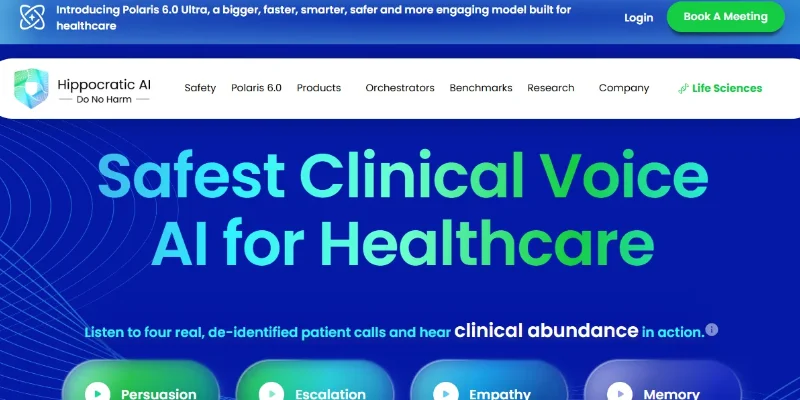
The platform is powered by Polaris, a healthcare-specific AI model family designed around patient safety, clinical communication, empathy, memory, and appropriate escalation. Its AI agents can communicate with patients through natural conversations, collect health-related information, provide approved educational information, coordinate appointments, and escalate situations requiring clinical judgment to licensed healthcare professionals.
Hippocratic AI offers several specialized solutions. AI Front Door helps patients with appointment scheduling, registration, insurance verification, prescription renewal requests, billing questions, and general healthcare enquiries. Nurse Co-Pilot supports frontline clinical staff with patient-facing interactions inside healthcare facilities. AI Compliance Supervisor monitors AI conversations for compliance, clinical errors, intent, and resolution quality. The company also provides an AI Certified Agent Builder to help organizations design, simulate, and improve specialized healthcare agents.
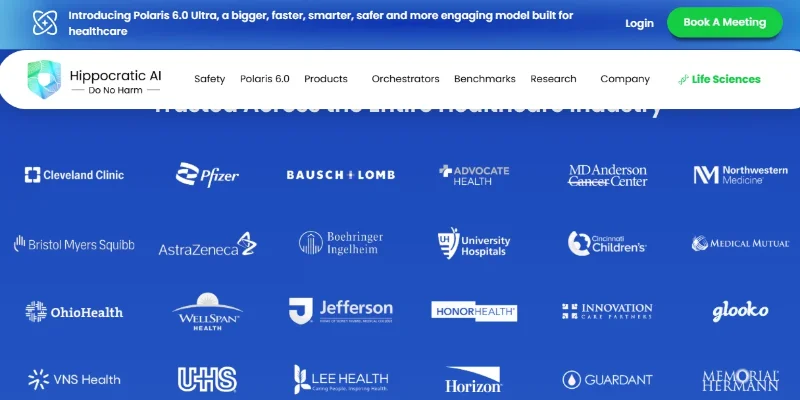
Its platform serves three major healthcare sectors: providers such as hospitals and medical groups, payors such as health insurance organizations, and life sciences companies involved in pharmaceutical research, patient support, and clinical trials. It also offers solutions for medical technology companies.
Verifiable Stats
-
Company Name: Hippocratic AI
-
Founder and CEO: Munjal Shah.
-
Platform Type: Healthcare AI Agents, Conversational Voice AI, and Healthcare Workflow Automation.
-
Core AI Technology: Polaris 6 model family.
-
Main Products: AI Front Door, Nurse Co-Pilot, AI Compliance Supervisor, and AI Certified Agent Builder.
-
AI Agent Library: 1,000+ specialized healthcare AI agents advertised on its official website.
-
Key Capabilities: Patient engagement, appointment scheduling, patient intake, care coordination, medication adherence outreach, post-discharge follow-ups, clinical trial support, and healthcare administration.
-
Target Industries: Hospitals, health systems, medical groups, health insurers, pharmaceutical companies, and medical technology organizations.
-
Safety Approach: Non-diagnostic and non-prescriptive patient-facing AI interactions, with escalation to licensed healthcare professionals when clinical judgment is required.
-
Model Options: Polaris Ultra, Pro, Flash, and Nano.
-
Pricing: Enterprise-oriented pricing based on model usage and deployment requirements; the website lists model-specific hourly rates.
-
Best For: Healthcare providers, payors, life sciences organizations, and medical technology companies.
Screenshots & Demo
Key Features
Core capabilities and functionalities provided by Hippocratic AI.
Context-Aware Code Completion & Synthesis
Delivers low-latency inline code completions, multi-token suggestions, and semantic completions customized to the repository context.
Multi-File Codebase Indexing & Exploration
Deeply scans project files, dependency trees, and symbol references to provide comprehensive cross-file edits and refactorings.
Automated Git & Terminal Workflow Automation
Executes shell commands, analyzes test runs, resolves syntax and runtime bugs, and crafts clean commit messages and pull requests.
Architectural Refactoring & Security Audit
Spots security vulnerabilities, dead code paths, and architectural smells, providing one-click semantic fixes and unit tests.
Pros & Cons
Key strengths and potential limitations of Hippocratic AI.
What We Like
- Healthcare-Specific AI Technology: Hippocratic AI uses its proprietary Polaris model family, designed specifically for healthcare conversations. Unlike general-purpose AI assistants, its technology focuses on patient communication, healthcare workflows, clinical safety, and appropriate escalation.
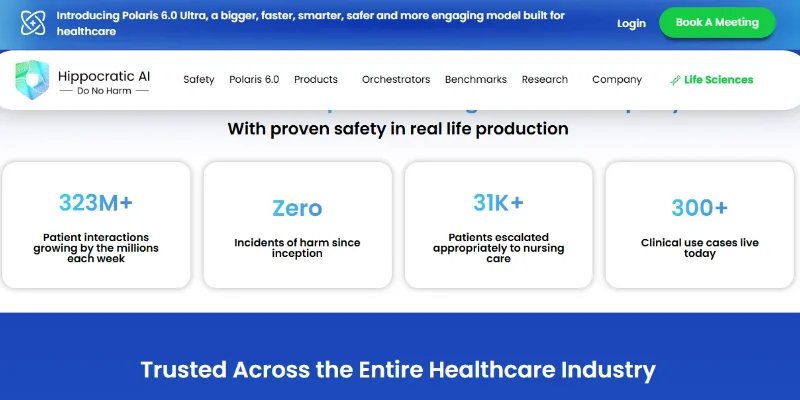
- Strong Patient Safety Focus: The platform uses multiple specialized AI supervisors and safety checks to monitor conversations, identify potential risks, and escalate situations requiring human clinical judgment. This makes it suitable for sensitive healthcare communication workflows.
- Large Library of Specialized AI Agents: Hippocratic AI advertises more than 1,000 specialized healthcare agents covering patient engagement, preventive care, medication adherence, care coordination, clinical trials, and other healthcare activities. This gives organizations multiple automation options
- Automated Patient Communication: Its voice agents can contact patients, answer approved healthcare-related questions, provide reminders, collect information, and coordinate follow-ups. This helps healthcare organizations manage large volumes of patient interactions.
- Supports Multiple Healthcare Workflows: The platform supports appointment scheduling, patient registration, insurance verification, prescription renewal requests, post-discharge follow-ups, medication adherence, and patient onboarding. This makes it useful across different stages of the patient journey.
Where It Falls Short
- Limited to Healthcare Applications: Hippocratic AI is designed specifically for healthcare organizations. It is not suitable for general-purpose business automation, everyday personal assistance, or unrelated productivity tasks.
- Not a Replacement for Licensed Clinicians: Its AI agents are designed for non-diagnostic and non-prescriptive interactions. They cannot replace doctors, nurses, or other licensed healthcare professionals when clinical judgment, diagnosis, or treatment decisions are required.
- Enterprise-Focused Platform: Its products are primarily designed for hospitals, health systems, insurers, and life sciences organizations. Individual users and small medical practices may find the platform less accessible or more complex to adopt.
- Deployment Can Require Technical Integration: Connecting AI agents with existing electronic health records, scheduling systems, CRM platforms, and care management software may require technical resources and implementation planning
- Usage-Based Costs Can Increase: Hippocratic AI publishes hourly pricing for its Polaris 6 models, starting at $2.50 per hour for Nano and $15 per hour for Ultra. High-volume deployments and more capable models can increase operating expenses.
Use Cases
Discover common workflows and scenarios where Hippocratic AI excels.
Patient Appointment Scheduling
AI agents can handle inbound calls to book, reschedule, and confirm appointments. They can also help patients find suitable appointment slots and reduce the workload on reception teams.
Appointment Reminders and Follow-Ups
Hospitals can use AI agents to remind patients about upcoming appointments, explain preparation instructions, and follow up after visits to reduce missed appointments.
Patient Registration and Intake
AI agents can collect basic patient information, medical history, medication lists, allergies, and reasons for visits before an appointment, helping staff prepare for consultations.
Post-Discharge Recovery Monitoring
After a patient leaves the hospital, AI agents can make follow-up calls to check recovery progress, ask about symptoms, reinforce discharge instructions, and escalate concerning responses to clinical staff.
Chronic Disease Management
Healthcare providers can use AI agents for regular check-ins with patients managing conditions such as diabetes, hypertension, kidney disease, and heart conditions. Agents can ask about progress and help coordinate follow-up care.
Medication Adherence and Refill Reminders
AI agents can remind patients to follow their prescribed medication schedules, check whether refills are needed, and identify issues that may prevent patients from taking their medication consistently.
Preventive Screening Outreach
Hospitals and health plans can contact eligible patients about recommended screenings, including mammograms, colorectal cancer tests, cervical cancer screening, and lung cancer screening.
Annual Wellness Visit Coordination
AI agents can identify patients due for annual wellness visits, explain the purpose of the appointment, collect preliminary information, and assist with scheduling
Similar AI Tools

PolyBuzz AI
What If You Could Chat with Any Character You Imagine?

My Spicy Vanilla
AI-planned date nights, roleplay ideas & love stories built for couples

FitRooted
FitRooted

Hidden Door
Create, Roleplay, and Explore Interactive Worlds with AI.
Character.AI
Immersive AI roleplay, character creation, and interactive storytelling.

PiTarot
PiTarot

AI Dungeon
Create Interactive Stories and AI-Powered Adventures

Vedic Astrology Chart
Vedic Astrology Chart
Latest from Our Blog
Tips, tutorials and insights about AI tools and how to use them effectively.
ChatGPT for Brand Voice: Can It Sound Like You?

ChatGPT for Marketing: The Complete 2026 Guide

Best AI Tools for Real Estate Agents in 2026: Listings, Leads and Follow-Up