

Wikis.ai
By Wikis.ai
What Happens When 30+ AI Models Answer the Same Question?
Overview
Summary: Wikis AI is a multi-model AI chat and research platform that lets users send one question to 30+ leading AI models and compare their answers side by side. It combines model comparison, web-based Deep Research, and an editorially structured AI Wiki so users can weigh different perspectives and make more informed decisions. It is browser-based, needs no separate provider subscriptions, and runs on a freemium model with paid plans starting at $14.99 per month billed annually.
What is Wikis AI?
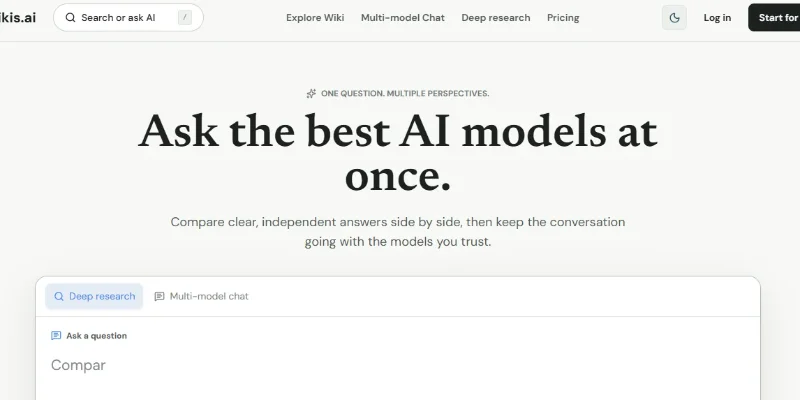
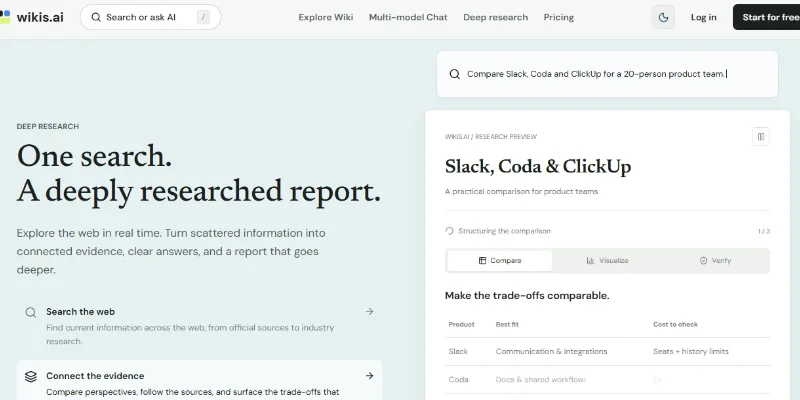
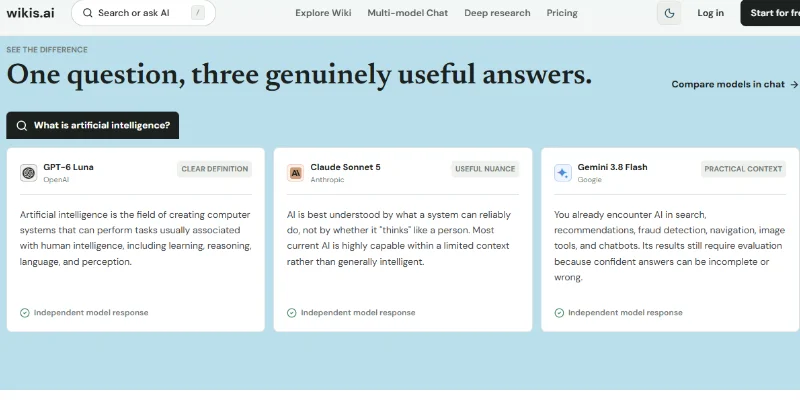
Wikis AI is a browser-based AI workspace for users who want to compare responses from multiple models without switching services. Users submit one prompt to selected models, review answers in a stable side-by-side grid, spot agreement or disagreement, and continue with whichever model is most useful. Its multi-model chat draws from providers including OpenAI, Anthropic, Google, DeepSeek, xAI, Kimi, and Qwen. Rather than merging responses into a single answer, Wikis AI keeps individual outputs visible so users can compare reasoning and omissions; consensus is a starting signal, not a guarantee of correctness. A Deep Research feature searches the web, gathers sources, compares evidence, and produces structured reports with inspectable citations, useful for research projects and technology analysis. The free public AI Wiki offers editorially structured guides on models, infrastructure, and safety, and any published answer can be pulled into a live chat as a follow-up. Paid plans add comparison of up to 8 conversations at once, searchable history, shareable previews, Markdown or PNG exports, and web search for current answers. All listed models sit inside one subscription, so separate ChatGPT, Claude, or Gemini accounts are not required.
Verifiable Stats:
-
Tool Type: Multi-Model AI Chat / AI Research Assistant / AI Model Comparison Platform.
-
Supported Providers: OpenAI, Anthropic, Google, DeepSeek, xAI, Kimi, Qwen, MiniMax, and Doubao, spanning flagship reasoning and faster everyday tiers.
-
Model Comparison: Paid plans compare up to 8 conversations simultaneously; the free public wiki shows 3 leading models per published question.
-
Core Features: Multi-model chat, Deep Research with source gathering, public AI Wiki guides, follow-up chat from any guide, and answer comparison.
-
Research Capabilities: Web search, multi-source evidence comparison, structured reports, and inspectable citations.
-
Pricing: Free tier includes 60 Basic and 6 Advanced prompts per month plus unlimited wiki access; Pro is $179.88 per year ($14.99 per month, 21% savings) with 10,000 Basic and 1,500 Advanced prompts; Unlimited is $299.88 per year ($24.99 per month, 36% savings) with unlimited prompts.
-
Prompt Counting: Each model response consumes one prompt from that model’s tier, so one question across four panels uses four prompts.
-
Company Stage: No institutional funding, valuation, or employee count disclosed; initial release dated August 28, 2026.
Screenshots & Demo
Key Features
Core capabilities and functionalities provided by Wikis.ai.
Context-Aware Code Completion & Synthesis
Delivers low-latency inline code completions, multi-token suggestions, and semantic completions customized to the repository context.
Multi-File Codebase Indexing & Exploration
Deeply scans project files, dependency trees, and symbol references to provide comprehensive cross-file edits and refactorings.
Automated Git & Terminal Workflow Automation
Executes shell commands, analyzes test runs, resolves syntax and runtime bugs, and crafts clean commit messages and pull requests.
Architectural Refactoring & Security Audit
Spots security vulnerabilities, dead code paths, and architectural smells, providing one-click semantic fixes and unit tests.
Pros & Cons
Key strengths and potential limitations of Wikis.ai.
What We Like
- Side-by-Side AI Model Comparison: Lets users submit a prompt to multiple AI models and compare their answers in one workspace instead of switching between separate platforms.
- Access to Multiple AI Providers: Brings together models from providers such as OpenAI, Anthropic, Google, and DeepSeek, depending on current availability.
- Deep Research Capabilities: Helps investigate complex questions by gathering web sources, comparing evidence, and producing structured research reports.
- Useful AI Knowledge Guides: Its public AI Wiki provides organized guides on AI models, technology, infrastructure, and related subjects.
- Conversation and Export Tools: Paid plans offer features such as searchable conversation history, shareable conversations, and Markdown or PNG exports.
Where It Falls Short
- Free-Plan Limits: Monthly prompt allowances restrict how extensively users can experiment with different models on the free tier.
- Paid Plans May Be Necessary: Frequent users who need advanced models, multiple simultaneous conversations, or higher usage limits may need a subscription.
- Model Availability Can Change: The available AI providers, models, and capabilities may vary over time or across subscription plans.
- Comparisons Require Human Judgment: Different models may produce conflicting or inaccurate answers, so users must evaluate evidence rather than assume the majority response is correct.
- Research Results Need Verification: Web-based research reports may contain incomplete sources, outdated information, or incorrect interpretations that require checking against original references.
Use Cases
Discover common workflows and scenarios where Wikis.ai excels.
Multi-Model AI Comparison
Submit the same prompt to multiple AI models and compare their responses side by side. This helps users identify differences in reasoning, clarity, structure, and suggested solutions.
AI-Powered Research
Use Deep Research to investigate complex topics, explore web sources, and organize findings into structured reports for further review.
Academic Research and Learning
Explore explanations from different AI models to understand difficult concepts, clarify questions, and support independent study. Students should verify factual claims and follow their institution's academic-integrity rules.
Content Writing and Editing
Generate article outlines, draft content, rewrite paragraphs, and compare writing styles across available models to develop more polished content.
Brainstorming and Idea Generation
Explore multiple approaches to a creative or business problem by comparing suggestions from different AI systems before selecting the most useful ideas.
Coding Assistance
Ask available AI models to explain code, suggest implementations, identify potential bugs, or compare different programming approaches. Test generated code before using it in production.
Fact-Checking and Answer Evaluation
Compare responses from different models to identify conflicting claims, missing context, or areas that need further investigation. Confirm important facts using reliable primary sources.
Business Research and Analysis
Investigate market trends, explore business concepts, and compare AI-generated recommendations to support preliminary analysis and planning.
Similar AI Tools






Latest from Our Blog
Tips, tutorials and insights about AI tools and how to use them effectively.
ChatGPT for Brand Voice: Can It Sound Like You?
ChatGPT for Marketing: The Complete 2026 Guide

Best AI Tools for Real Estate Agents in 2026: Listings, Leads and Follow-Up
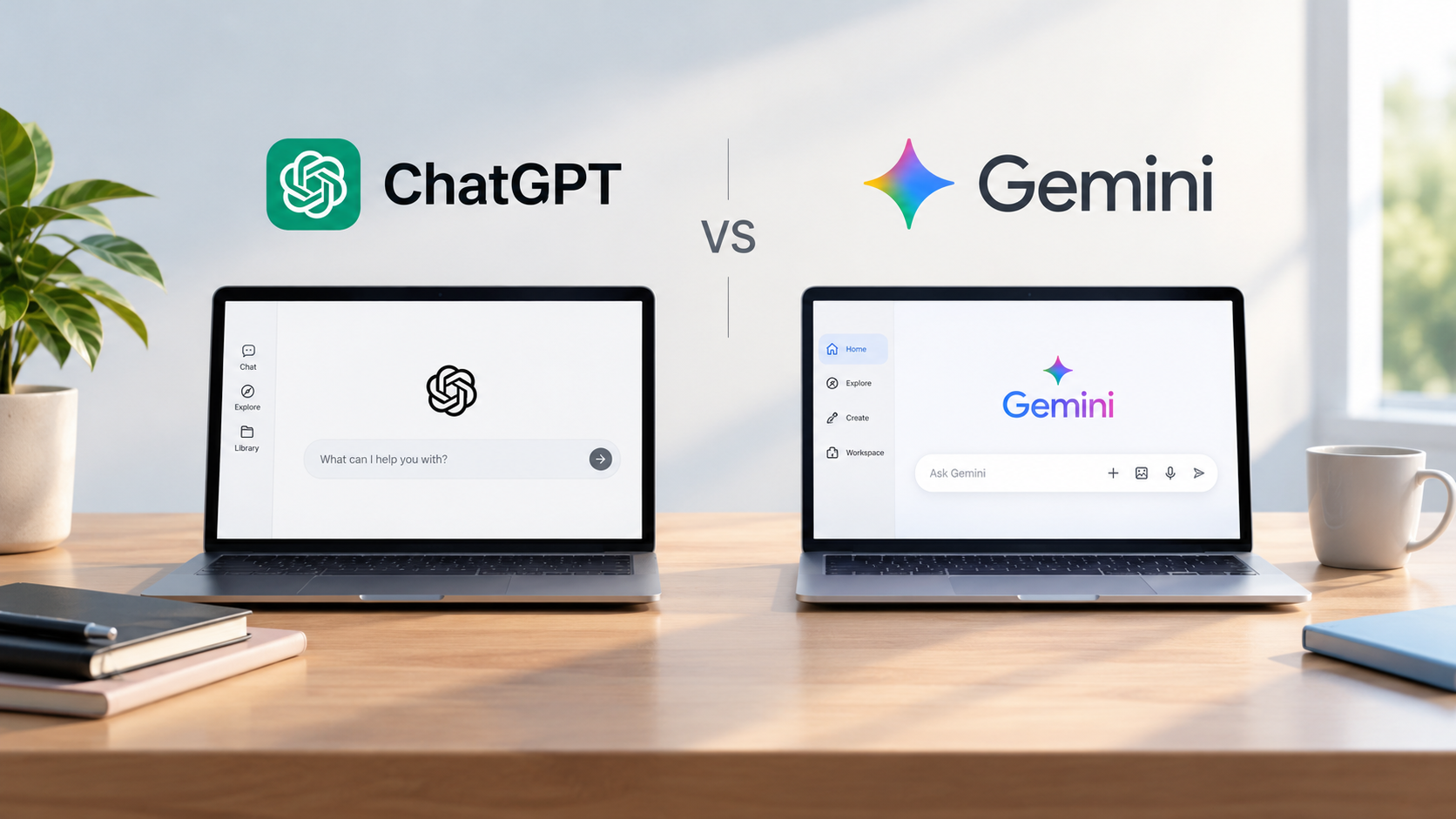
Google Gemini vs ChatGPT: Which AI Assistant Should You Actually Use?
Reviews & Community Ratings
Average rating: 8.5 out of 5 (1 total reviews)
Rate Wikis.ai
Community Reviews (0)