Elon Musk Warns 200+ AI Cloud Firms Face “Guppy-Level Death” as SpaceX Closes $40 Billion GPU Debt Deal
Elon Musk warned that 200+ AI neoclouds face “guppy-level death and consolidation” because debt markets have shut off financing for companies without revenue outside AI data centres. His warning came as SpaceX closed a $40 billion GPU debt deal—financing Musk says only investment-grade operators with independent revenue like Starlink can secure.
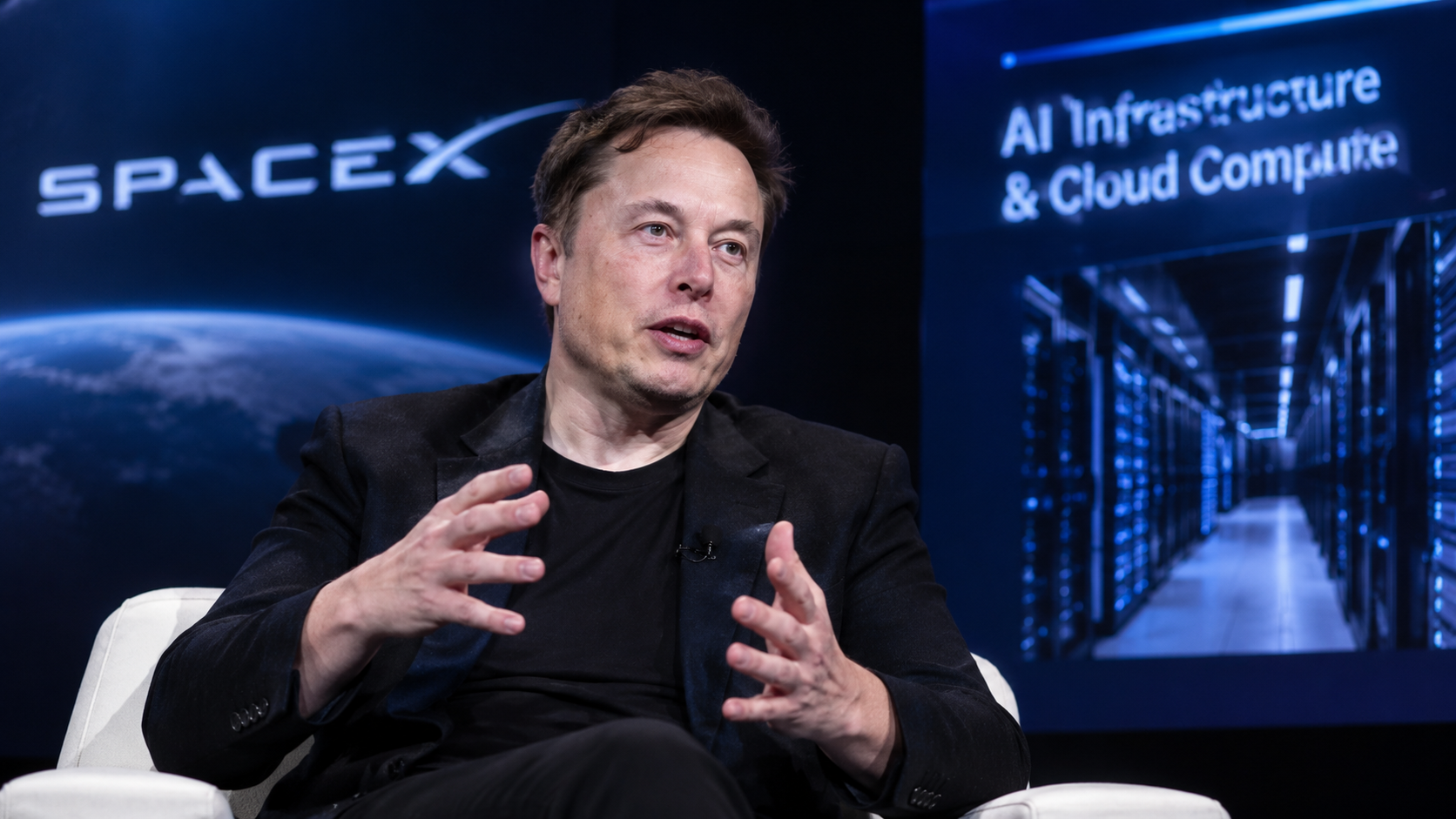
Elon Musk warned on October 25, 2026, that more than 200 specialised AI cloud providers—known as neoclouds—face widespread failure and consolidation because debt markets have “almost entirely shut off” financing for companies without revenue outside AI data centres. The warning came as SpaceX, Musk’s rocket and satellite company, announced it had closed a $40 billion debt deal to buy GPUs for its own AI buildout, a contrast Musk used to underscore the widening divide between creditworthy AI infrastructure players and debt-dependent challengers.
What Exactly Did Musk Say About the AI Cloud Market?
Musk said debt markets have become effectively closed to neoclouds that lack independent revenue streams, and he predicted mass consolidation among the more than 200 companies that rent out GPU capacity for AI workloads. In a post on X, Musk wrote: “As of the past few weeks, debt markets have almost entirely shut off access to money for any company that doesn’t have substantial revenue independent of AI data centers. SpaceX closed $40B of debt for GPUs, but we’re investment grade and have Starlink & launch revenue. That means the 200+ neoclouds are going to see guppy-level death and consolidation. Some will make it through, but not many”.
The phrase “guppy-level death” is a reference to the guppy fish, a freshwater aquarium species notorious for dying suddenly when its environment changes—an analogy Musk deployed to describe how quickly smaller cloud providers could collapse once credit tightens. He also ruled out SpaceX acquiring any of the struggling neoclouds, calling such a move “pointless”.
Why Are Neoclouds Suddenly So Vulnerable?
Neoclouds are specialist cloud providers that rent clusters of high-speed Nvidia GPUs to AI developers for training and inference, and their business model depends on continuous access to debt to buy chips and build data centres. Unlike hyperscalers such as Amazon Web Services, Microsoft Azure, and Google Cloud—which fund AI infrastructure from diversified cash flows—neoclouds must borrow heavily to scale, leaving them exposed when lenders grow cautious.
The market stress is already visible. CoreWeave, the largest US neocloud, has seen its share price fall roughly 60% over the past year, and the cost of insuring its debt against default has climbed to levels that typically signal credit distress. Musk’s comments landed during a period when investors are increasingly questioning whether the enormous borrowing behind the AI buildout will generate sustainable returns.
What Is SpaceX’s $40 Billion Debt Deal—and Why Does It Matter?
SpaceX closed $40 billion in debt financing primarily structured as callable debt for GPU purchases scheduled to arrive in the first and second quarters of 2027, according to Musk’s posts on X. Musk attributed SpaceX’s ability to secure the financing to its investment-grade credit rating and its revenue from Starlink satellite internet and rocket launch operations—income streams that exist independently of AI data centres.
The contrast Musk drew is central to his argument: SpaceX can borrow at scale because it has a diversified business, while neoclouds that depend almost entirely on AI compute rentals cannot. Bloomberg subsequently reported that pricing talks for the SpaceX debt deal were still ongoing as of October 26, despite Musk describing the financing as closed—a detail that adds nuance to the announcement but does not change the underlying financing gap Musk highlighted between diversified operators and pure-play neoclouds.
How Does This Fit With Musk’s Earlier Comments on AI Compute Demand?
Just days before the “guppy-level death” warning, Musk told investors on SpaceX’s third-quarter earnings call that demand for AI compute is so strong that fears of oversupply are “ridiculous”. He said SpaceX “could rent out our compute several times over if we said yes to everyone,” and that a six-month payback period for computing infrastructure next year was possible, though he stopped short of predicting it.
The two positions are not contradictory. Musk’s demand-side optimism concerns the market for GPU capacity—customers are lining up, and even older H100 chips are renting for more than they did when new. His supply-side warning concerns financing: the demand can be real while the debt needed to build capacity becomes prohibitively expensive for companies without independent revenue. That distinction matters because neoclouds face a timing mismatch—they must spend heavily upfront on GPUs and data centres before customer revenue arrives, and if credit markets close, the gap becomes fatal.
What Does This Mean for the Broader AI Infrastructure Market?
Musk’s warning points to a widening split in the AI infrastructure market: diversified operators with strong credit access and independent revenue can sustain enormous spending, while specialised neoclouds face a financing wall that could force sales, mergers, or shutdowns. The consolidation Musk predicts would likely benefit larger players—hyperscalers and investment-grade AI infrastructure companies—by reducing competition for GPU supply and allowing them to acquire stranded compute capacity at distressed prices.
For the AI industry more broadly, the shakeout Musk forecasts does not signal an end to the AI buildout; it signals a transfer of control over that buildout from debt-fuelled specialists to balance-sheet-strong incumbents. The question investors are now confronting is not whether demand for AI compute exists, but who will own the infrastructure that meets it—and on what terms.
Key Facts / At-a-Glance
-
Musk’s warning: More than 200 neoclouds face “guppy-level death and consolidation”; “some will make it through, but not many”.
-
SpaceX debt deal: $40 billion in primarily callable debt for GPU purchases arriving in Q1 and Q2 2027.
-
Musk’s stated advantage: SpaceX is investment-grade and has Starlink and launch revenue independent of AI data centres.
-
Market stress signal: CoreWeave shares down roughly 60% over the past year; its debt-default insurance costs have reached distress levels.
-
Demand backdrop: Musk said SpaceX could rent its compute “several times over” and that oversupply fears are “ridiculous”.
-
No SpaceX acquisitions: Musk ruled out buying neoclouds, calling it “pointless”.
Original Source & Attribution
The Guardian
Read the original announcement and verify the source reporting.
Find the Right AI Tools for Your Next Big Idea
Explore 2,600+ AI tools, compare features, discover powerful solutions and find the right software for your work.