US Bans DeepSeek: DHS Orders Removal of Chinese AI From All Federal Civilian Agencies
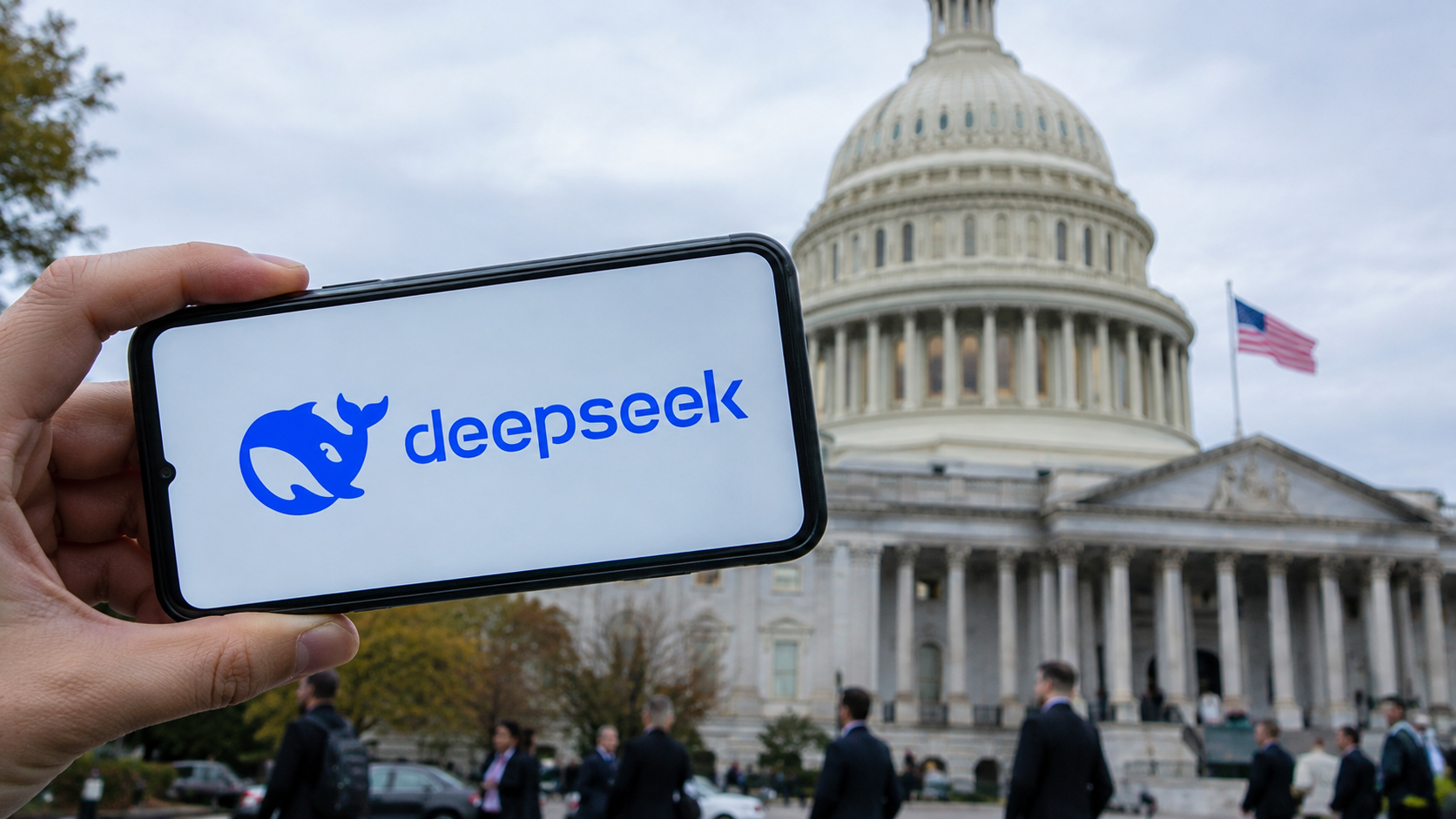
The US Department of Homeland Security has ordered all federal civilian agencies to remove DeepSeek products and any third-party tools built on DeepSeek models from their IT systems, marking the first government-wide ban on a Chinese AI provider. The order was signed July 24, 2026, and published in the Federal Register on October 20, 2026.
Key Takeaways
-
The US Department of Homeland Security (DHS) ordered the removal of all DeepSeek products—and third-party tools built using DeepSeek models—from federal civilian agency IT systems, effective upon publication on October 20, 2026.
-
The order, signed by Homeland Security Secretary Markwayne Mullin on July 24, 2026, also bars federal civilian agencies from procuring DeepSeek products or services.
-
DHS cited “multiple threat vectors,” warning that DeepSeek’s China-based servers could expose sensitive US government data to Chinese authorities and that the models “may contain malware or other security vulnerabilities”.
-
China’s Foreign Ministry and Commerce Ministry condemned the ban as an “overstretching of the concept of national security” and warned of “necessary measures” in response.
-
The ban applies only to federal civilian agencies such as Treasury, State, and Justice; the Department of Defense and intelligence agencies fall outside its scope.
-
At least nine governments worldwide, including Australia, the Czech Republic, South Korea, and Taiwan, have already restricted DeepSeek products since early 2025.
Lede
The US Department of Homeland Security on October 20, 2026, ordered all federal civilian agencies to remove DeepSeek artificial intelligence products—and any third-party tools developed using DeepSeek models—from their IT systems, citing national security risks tied to data transfers to China. The order, signed on July 24 and published in the Federal Register, also bars agencies from procuring DeepSeek products or services, marking the first government-wide prohibition of the Chinese AI startup.
What Exactly Does the DeepSeek Ban Prohibit?
The ban prohibits federal civilian agencies from both procuring DeepSeek products and removing existing DeepSeek implementations from their information technology systems. The DHS order, issued under the Federal Acquisition Supply Chain Security Act of 2018, excludes “information technology products and services developed by Hangzhou DeepSeek Artificial Intelligence Co., Ltd (DeepSeek), to include affiliated entities,” from federal civilian agency procurements. It further requires the removal of “all DeepSeek and DeepSeek-affiliate products, and third-party products and services developed using DeepSeek implementations” from civilian agency IT systems.
The scope extends beyond DeepSeek’s own branded products. Any software or service built using DeepSeek’s models—including those offered by third-party vendors—must also be removed. SecurityAffairs noted that the notice “doesn’t explain exactly what counts as a ‘DeepSeek implementation,’” meaning agencies must ask suppliers whether their products fall under the ban. This creates significant compliance challenges for agencies that may be using DeepSeek models indirectly through AI gateways or application programming interfaces without realizing it.
Why Did the US Government Ban DeepSeek?
The DHS ban is grounded in national security concerns about data security and Chinese government access to US information. The Federal Register notice states that DeepSeek’s models “present multiple threat vectors,” and that using the company’s products “may result in the transfer of sensitive data to the PRC if used by US government employees or vendors”. DHS specifically cited the location of DeepSeek’s servers in China, where the legal system grants government cyber and intelligence agencies “extensive authority” to access private company infrastructure. The order warns that information transferred to China, when combined with publicly available data, “could produce actionable intelligence on U.S. persons and/or government programs”.
The notice also states that DeepSeek’s models “themselves may contain malware or other security vulnerabilities,” adding a supply-chain security dimension to the data-transfer concerns. The US government has separately accused DeepSeek and other top Chinese AI firms of systematically stealing the capabilities of cutting-edge models developed by American rivals through a process known as “distillation”.
How Has China Responded to the DeepSeek Ban?
China condemned the ban as an abuse of national security powers and warned of retaliatory measures. Chinese Foreign Ministry spokesperson Mao Ning told reporters in Beijing that China “will resolutely safeguard the legitimate rights and interests of Chinese companies” and “consistently opposes the overstretching of the concept of national security”. China’s Ministry of Commerce expressed “strong dissatisfaction and firm opposition,” stating that the US “disregarded the consensus reached between Xi and Trump” and was trying to “suppress and contain China” through “discriminatory restrictions under the guise of national security”. The ministry added that China “will closely monitor the situation and take all necessary measures to firmly defend its legitimate rights and interests”.
DeepSeek itself did not immediately respond to a request for comment from the Associated Press.
Which Agencies and Entities Are Covered and Which Are Not?
The ban applies to federal civilian executive branch agencies but excludes the Department of Defense and intelligence agencies. The DHS notice covers agencies such as the Treasury Department, the State Department, and the Justice Department, but the Defense Department and intelligence services fall outside its scope because DHS can issue direction to civilian agencies but not the military or intelligence services. National security systems and certain classified intelligence systems are also excluded from the order’s reach.
Several federal agencies had already acted independently before the government-wide order. The Commerce Department and the US Navy banned DeepSeek on government devices in early 2025, and the Defense Information Systems Agency (DISA) began blocking DeepSeek on the Pentagon’s IT networks in January 2025. The fiscal 2026 National Defense Authorization Act, signed into law in December 2025, included a provision banning the DeepSeek application from national security systems within the US intelligence community. The new DHS order extends these fragmented prohibitions into a unified, government-wide mandate for civilian agencies.
How Does the Ban Affect US Companies and the AI Market?
The ban’s impact is expected to extend beyond government agencies, potentially chilling private-sector adoption of Chinese AI models. Because the order covers “third-party products and services developed using DeepSeek implementations,” companies that serve both government and commercial clients must audit their AI supply chains to ensure they are not inadvertently using DeepSeek models. Government contractors generally cannot use covered products or services for federal contracts unless they receive a waiver.
The order may also benefit US AI companies by reducing competition from low-cost Chinese models in the federal marketplace. DeepSeek’s open-source models remain widely available in the United States and are mostly free to use, but the ban signals that federal procurement will favor AI providers that can demonstrate clear data-residency and supply-chain controls.
Key Facts / At-a-Glance
-
Order signed: July 24, 2026, by Homeland Security Secretary Markwayne Mullin.
-
Published: October 20, 2026, in the Federal Register as document 2026-21447.
-
Legal authority: Federal Acquisition Supply Chain Security Act of 2018 (41 U.S.C. 1321–1328).
-
Scope: All federal civilian executive branch agencies; excludes the Department of Defense and intelligence agencies.
-
Prohibited actions: Procuring DeepSeek products; retaining DeepSeek or DeepSeek-dependent third-party products in IT systems.
-
Stated rationale: “Multiple threat vectors,” including data transfer to China and potential malware.
-
China’s response: “Strong dissatisfaction and firm opposition”; warned of “necessary measures”.
-
International context: At least nine governments have restricted DeepSeek, including Australia, the Czech Republic, South Korea, Taiwan, and Italy.
Original Source & Attribution
US Department of Homeland Security / Federal Register
Read the original announcement and verify the source reporting.
Find the Right AI Tools for Your Next Big Idea
Explore 2,600+ AI tools, compare features, discover powerful solutions and find the right software for your work.